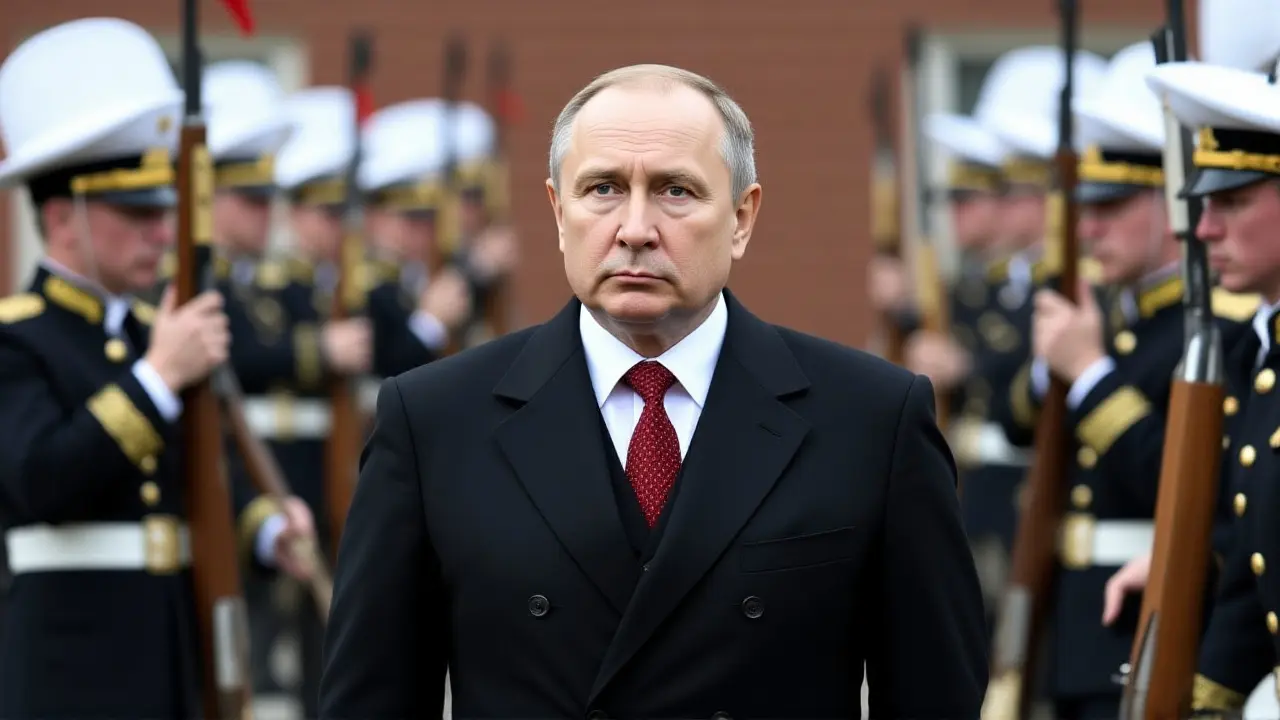
The sky over Kyiv turned orange with explosions just after 5 a.m. on February 24, 2022. It wasn't a drill. In a televised address that would echo through history, Vladimir Putin, President of Russia announced what he called a "special military operation." To the world, it was an unprovoked full-scale invasion.
Here’s the thing: this wasn’t the start of a new conflict. It was the violent escalation of a war that had been simmering since 2014. But nothing prepared the global community for the speed or scale of the assault launched from multiple directions, including from occupied Crimea and across the border from Belarus.
The Justifications That Fell Flat
Putin didn’t declare war. He carefully avoided the word, citing Article 51 of the United Nations Charter regarding self-defense. Instead, he framed the attack as a necessary intervention to "demilitarize and denazify" Ukraine. He claimed that Russian speakers in the Donbas region—specifically the self-proclaimed Donetsk People's Republic and Luhansk People's Republic—were facing "genocide" by the Kyiv regime.
But wait. The details don't add up. International observers and human rights groups had found no evidence of genocide. Scholars like Michael McFaul and Robert Person later described Putin’s historical claims—that modern Ukraine was entirely created by Russia—as "grotesque." The real drivers seemed less about protecting people and more about imperial ambition. Putin had spent months amassing troops along the border, demanding veto power over NATO expansion and rejecting Ukraine’s sovereignty.
A Strategic Failure Unfolds
Within minutes of the announcement, air raid sirens wailed across Ukrainian cities. The initial plan was a blitzkrieg-style capture of Kyiv. Russian Ground Forces moved in from three sides, attempting to encircle Ukrainian defenses with massive bombardment. They expected a quick collapse of the government.
They got resistance instead. Volodymyr Zelensky, President of Ukraine refused to flee. He declared martial law and called for general mobilization, turning the population into a unified front. What was supposed to be a swift victory dragged on. By mid-April, Russian forces were retreating from the north, shifting their focus to the eastern provinces of Donetsk and Luhansk. The strategic failure was becoming apparent to even the most die-hard supporters of the Kremlin.
The Shadow of May 9
As the momentum stalled, whispers emerged from Western intelligence circles. There were discussions about Putin potentially declaring formal war on May 9, 2022—the date of Russia’s Victory Day commemorating the defeat of Nazi Germany in World War II. Why that date? A formal declaration would have allowed Putin to fully mobilize reserve forces under Russian law, addressing the desperate need for troops amid heavy losses.
Interestingly, Sergei Lavrov, Foreign Minister of Russia signaled earlier that week that Moscow wouldn’t rush to meet that symbolic deadline. Whether it was a bluff or a genuine hesitation remains unclear. What is clear is that the threshold for escalation had already been crossed, and the path back to normalcy was gone.
Global Consequences
The ripple effects were immediate. Leaders around the world condemned the attack. Sanctions poured in, targeting Russian banks, energy sectors, and oligarchs. The conflict forced nations to rethink their energy independence and defense spending. For Ukraine, it meant a fight for survival. For the world, it marked the end of post-Cold War security assumptions in Europe.
The details are still being uncovered, but one thing is certain: the "special military operation" changed the geopolitical landscape overnight. It wasn't just a regional dispute anymore; it was a test of international order.
Frequently Asked Questions
Why did Putin call it a 'special military operation' instead of war?
By avoiding the word "war," Putin likely aimed to minimize domestic backlash and avoid triggering certain legal mechanisms within Russia that require parliamentary approval for a formal state of war. This terminology also allowed him to frame the action as a limited police action rather than a full-scale conflict, though the reality involved massive troop deployments and widespread destruction.
What were the main claims used to justify the invasion?
Putin cited several baseless claims, including allegations of genocide against Russian speakers in the Donbas region, the presence of neo-Nazis in the Ukrainian government, and threats from NATO expansion. He also claimed Ukraine was developing nuclear weapons. None of these claims were supported by credible evidence from international organizations or independent observers.
How did Ukraine respond immediately after the invasion began?
Ukrainian President Volodymyr Zelensky declared martial law and called for a general mobilization of all military-age citizens. Rather than fleeing the capital, he stayed in Kyiv, boosting morale. The Ukrainian Armed Forces mounted a fierce defense, utilizing asymmetric tactics and civilian support to slow the Russian advance, particularly in the north and west.
What happened to the initial Russian strategy?
The initial strategy focused on a rapid capture of Kyiv and other major cities to decapitate the Ukrainian government. However, logistical failures, strong Ukrainian resistance, and poor planning led to significant setbacks. By April 2022, Russian forces withdrew from northern regions and shifted their focus to grinding offensives in the east, marking a transition from blitzkrieg to attrition warfare.
Why was May 9, 2022, considered a critical date?
May 9 is Victory Day in Russia, commemorating the end of World War II in Europe. Western officials reported that Putin might have considered declaring formal war on this date to legitimize a full mobilization of reserves. A formal declaration would have bypassed political hurdles and allowed for broader conscription, addressing the severe manpower shortages suffered by Russian troops.
What role did NATO play in Putin's justification?
Putin repeatedly framed NATO’s eastward expansion as an existential threat to Russia. He demanded guarantees that Ukraine would never join the alliance and sought veto power over future expansions. While Ukraine was not a NATO member at the time, the alliance’s increased military cooperation with Kyiv was cited by the Kremlin as evidence of hostile intentions, despite NATO’s defensive posture.